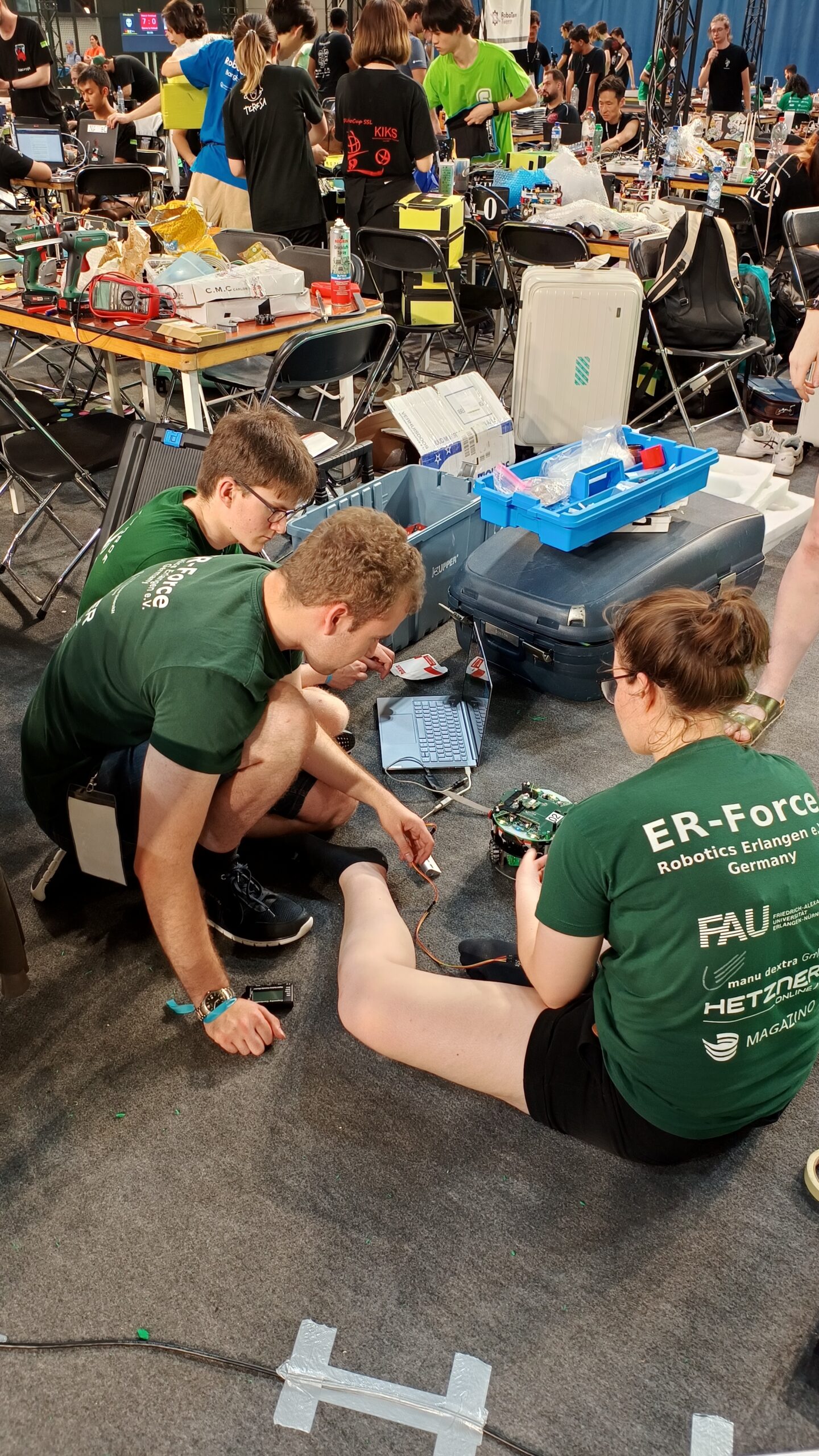

Day 3 – Progress with Obstacles

The day began, as so often, with a hearty breakfast – by now almost a fixed ritual that gives the day a bit of structure. Along with it came a bit of SIM card chaos: the search for the cards turned into a bit of an adventure, after a shop assistant from a small store sent us wandering through the alleyways of Salvador. With a strong sense of direction (and a bit of luck), we eventually found ourselves in the right place.

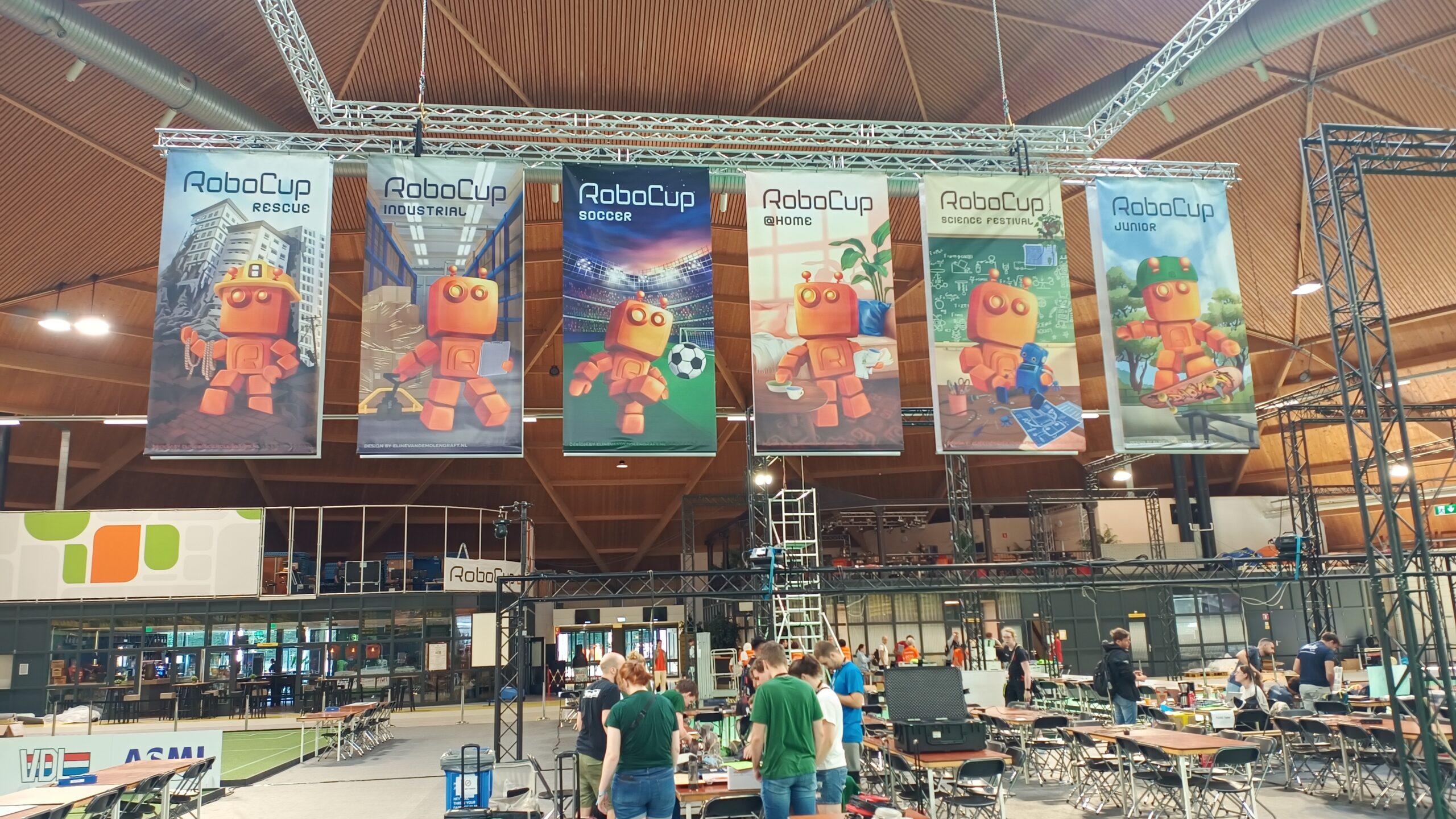
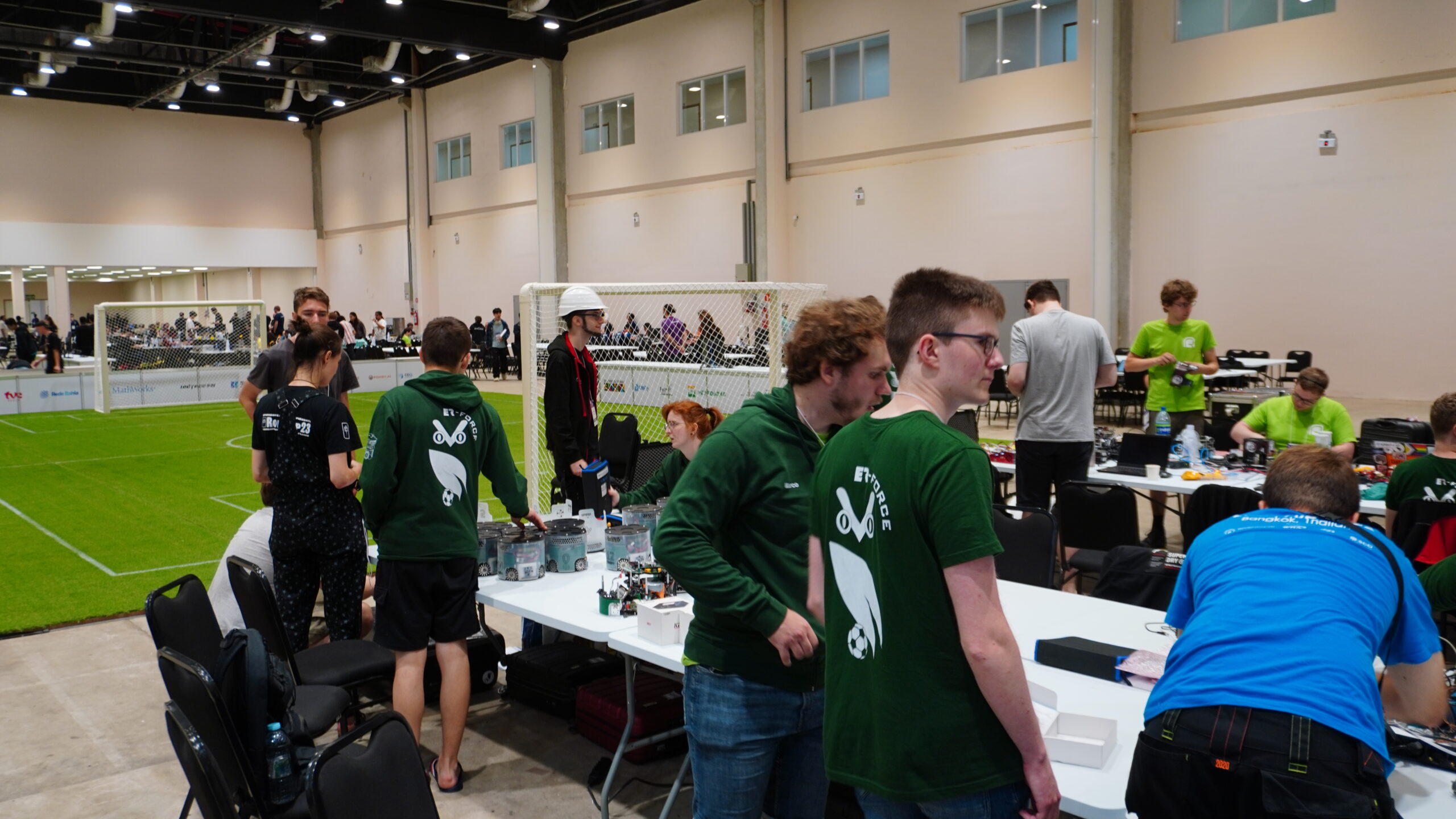
Then it was off to the venue for the first time – straight across Salvador. And here, a stark contrast revealed itself: while outside the usual Brazilian street life was in full swing, the venue felt almost like a different world.
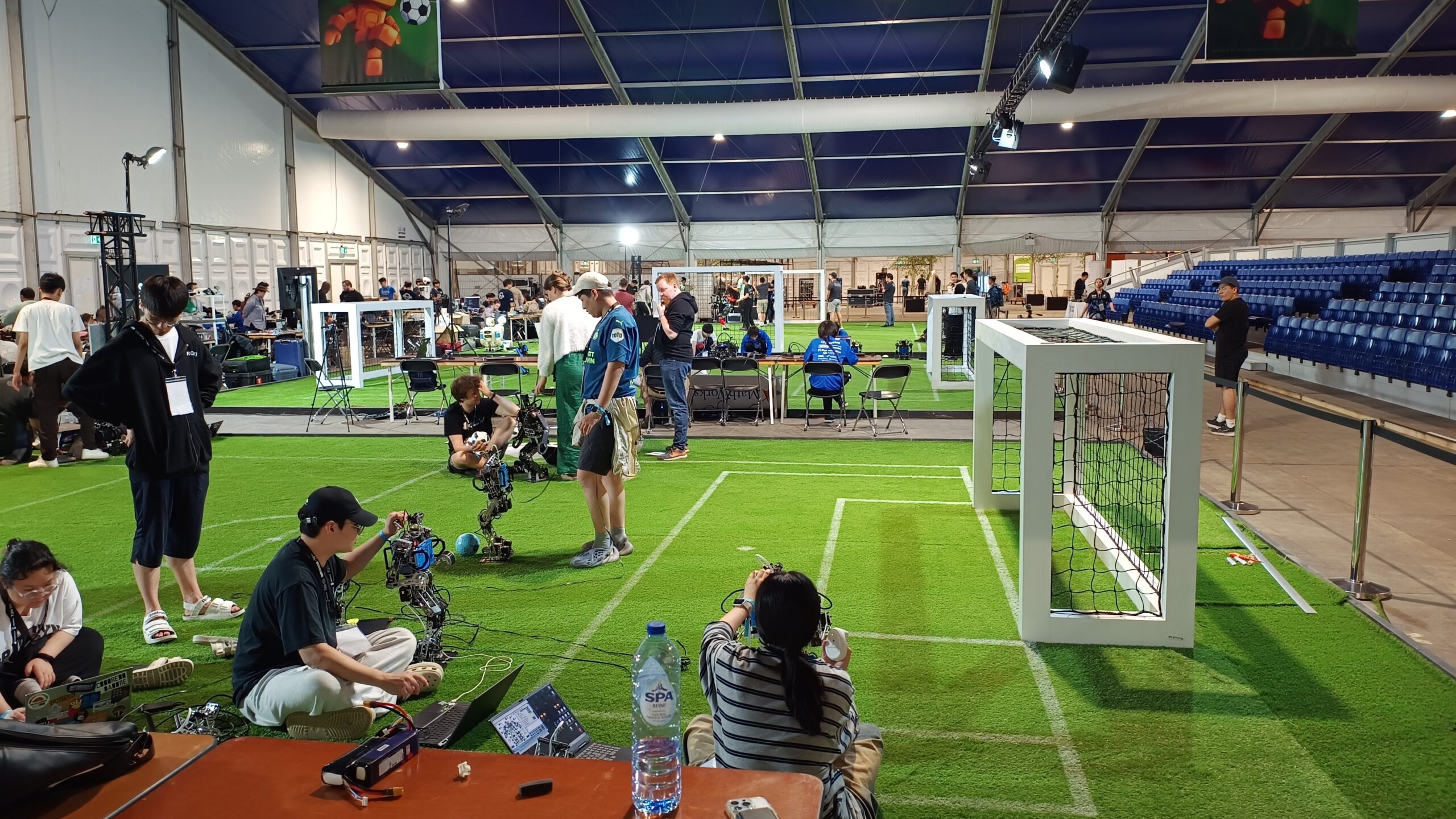
Super modern, spacious, with stable internet – and most importantly: lots of room! A real upgrade for all teams.
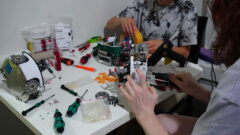
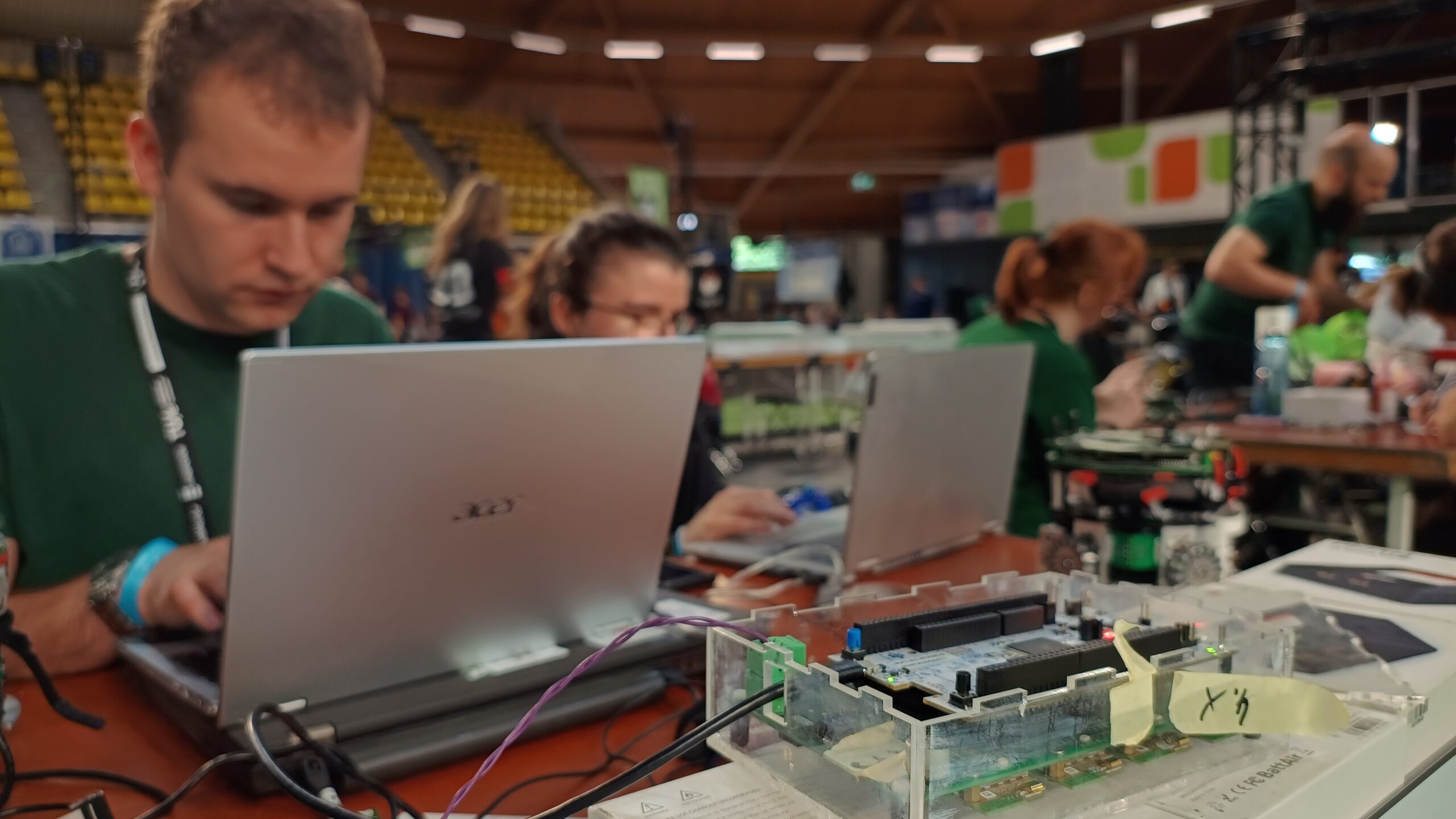
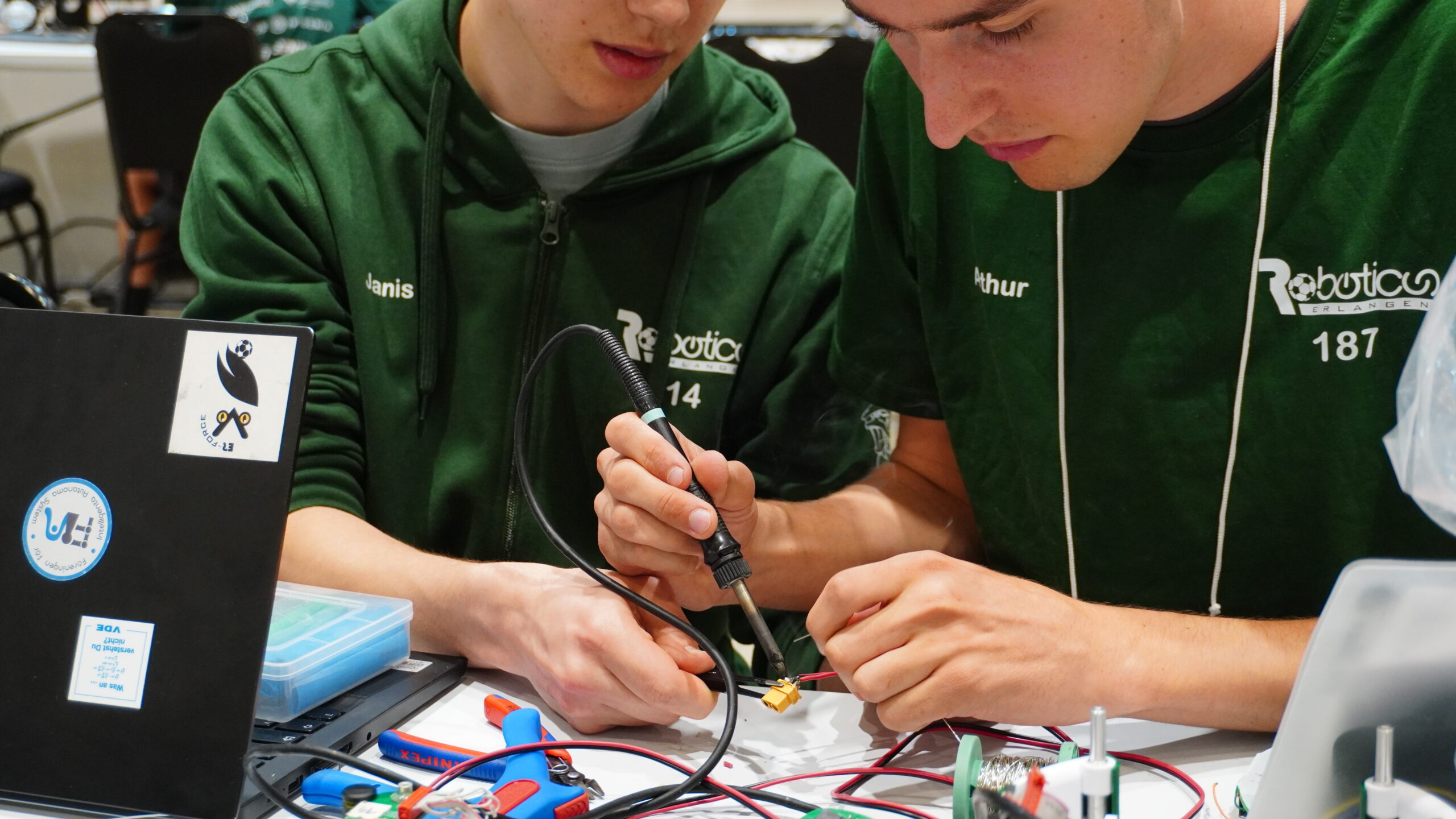
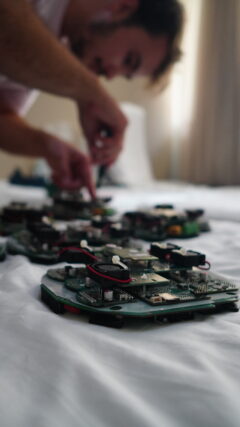
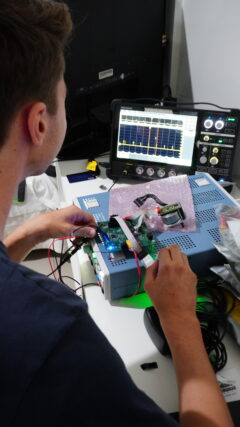
On the technical side, things also moved forward nicely. The firmware managed to fully implement the return channel – a key feature for radio communication with the robots. Work on the FPGA continued as well – a chip in our new radio module that’s programmed on the hardware level and offers a lot of flexibility. The electronics were also put to use: cable issues were fixed, and – as always – some things were freshly soldered.

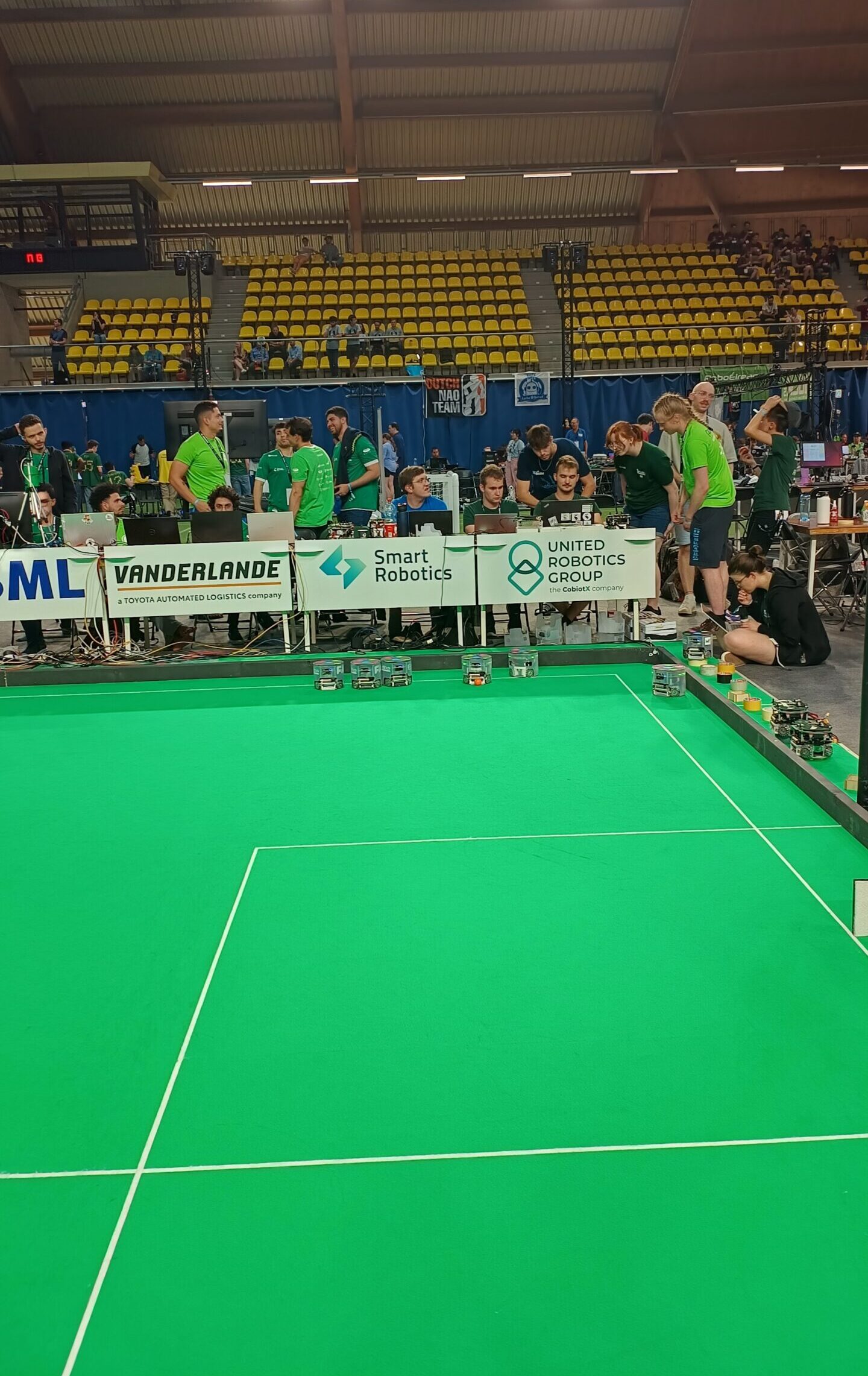
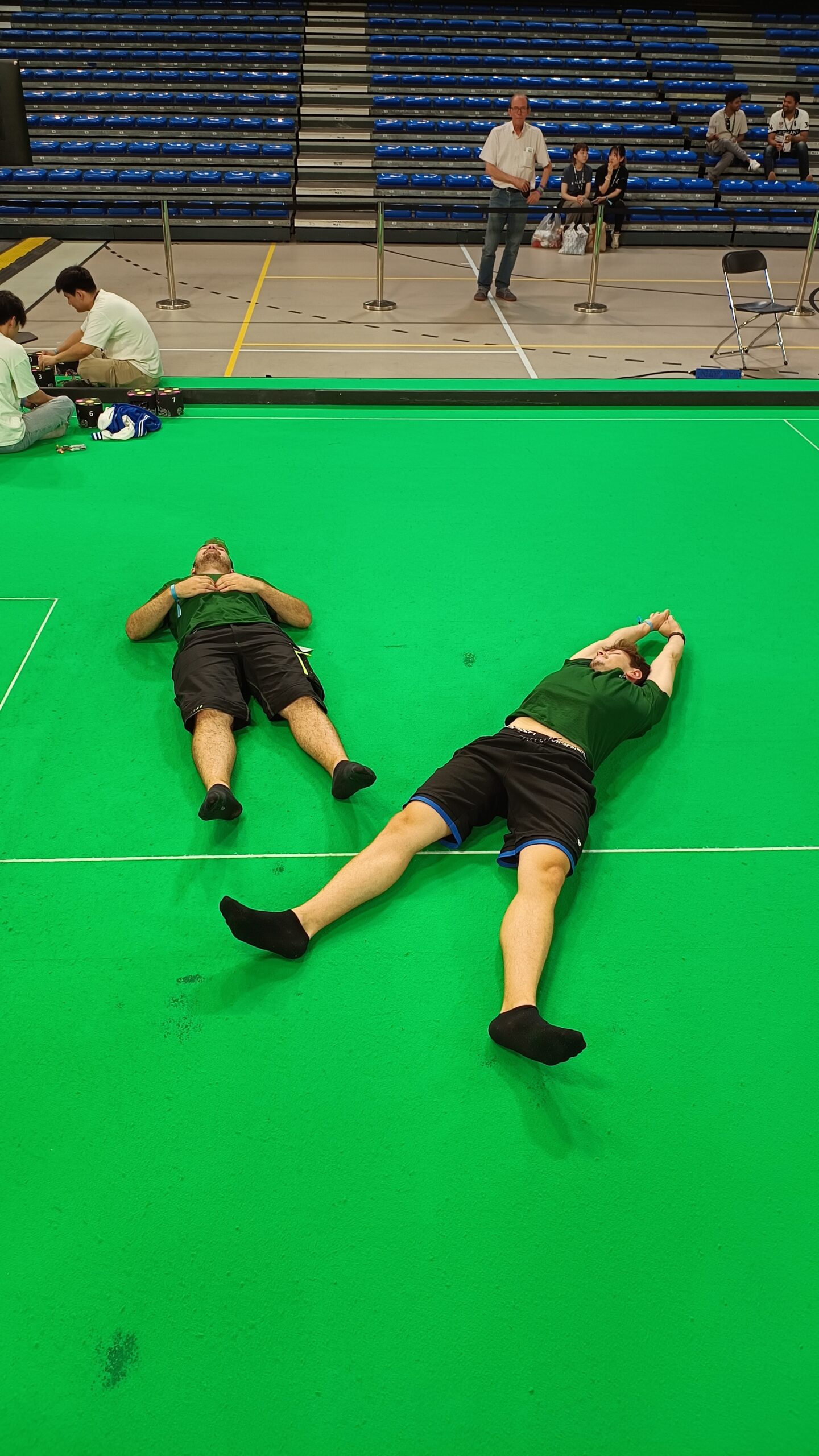
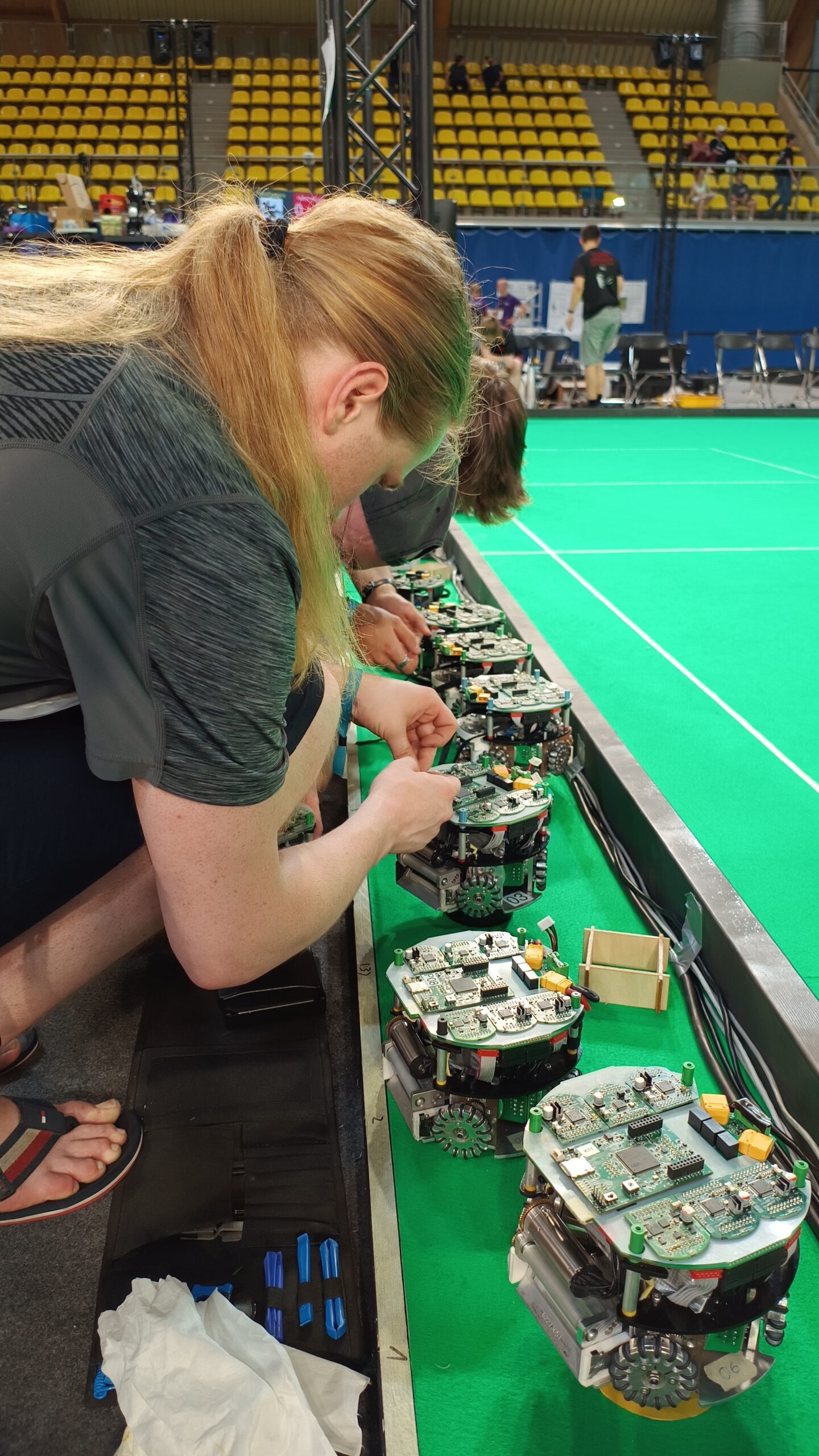
Then the highlight (or rather, the low point) of the day: the first official test slot on the field. Finally a chance to test our systems under competition conditions. Unfortunately, the first run ended in a collective crash test – several robots drove straight into the wall and had to be repaired afterward. The mood was accordingly tense.
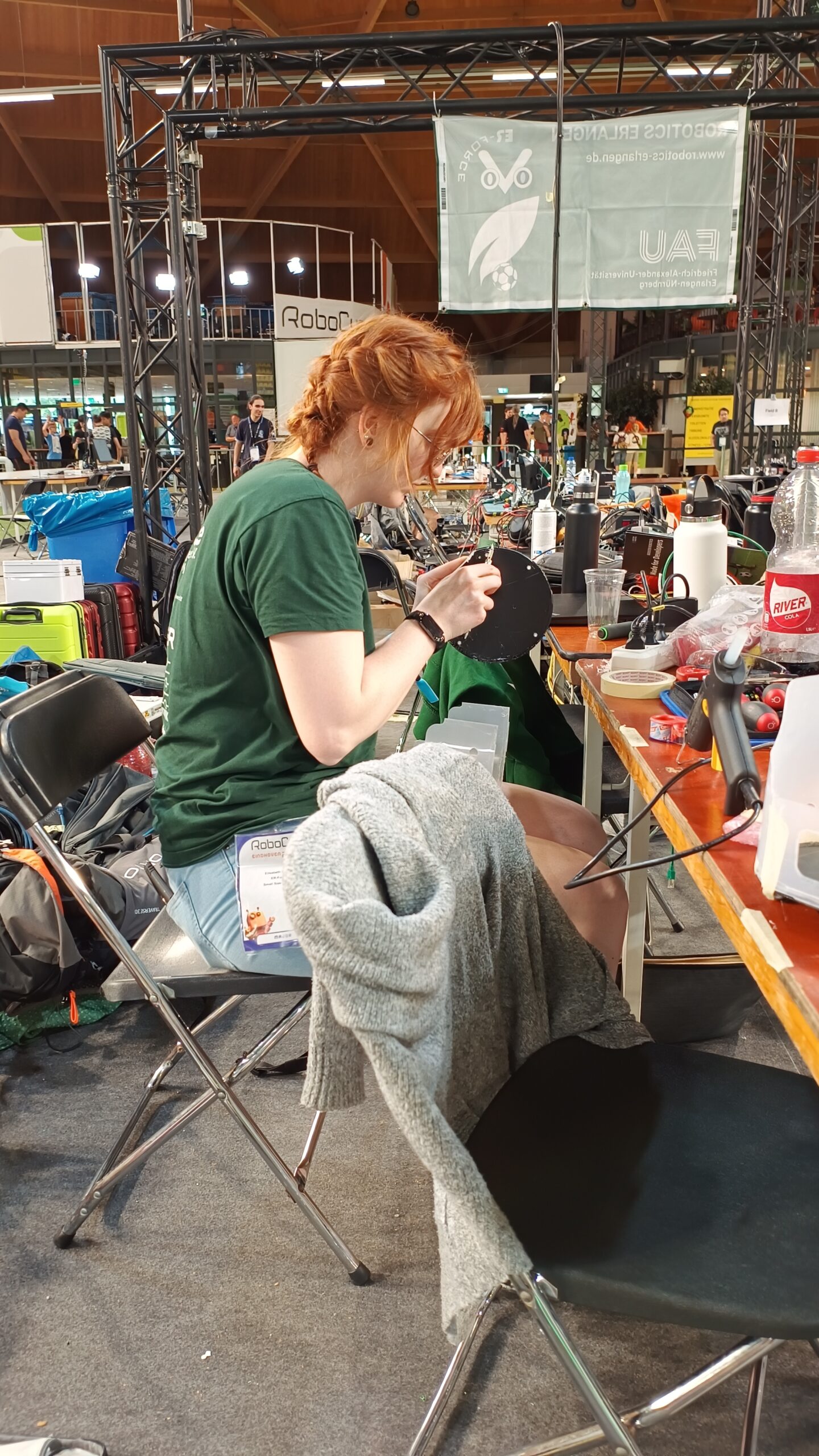
In the mechanics department, things were buzzing: shot covers had to be re-cut, casings re-glued, and damaged parts replaced. A small-scale material battle – but that’s just how it goes. There seems to be an unwritten rule: no matter how well everything works back in Erlangen – once you’re on site, something always goes wrong.

Still: progress was made. The setup is in place, many construction sites are resolved, and the motivation is there. And sometimes, that’s enough to start the next day with a good feeling.
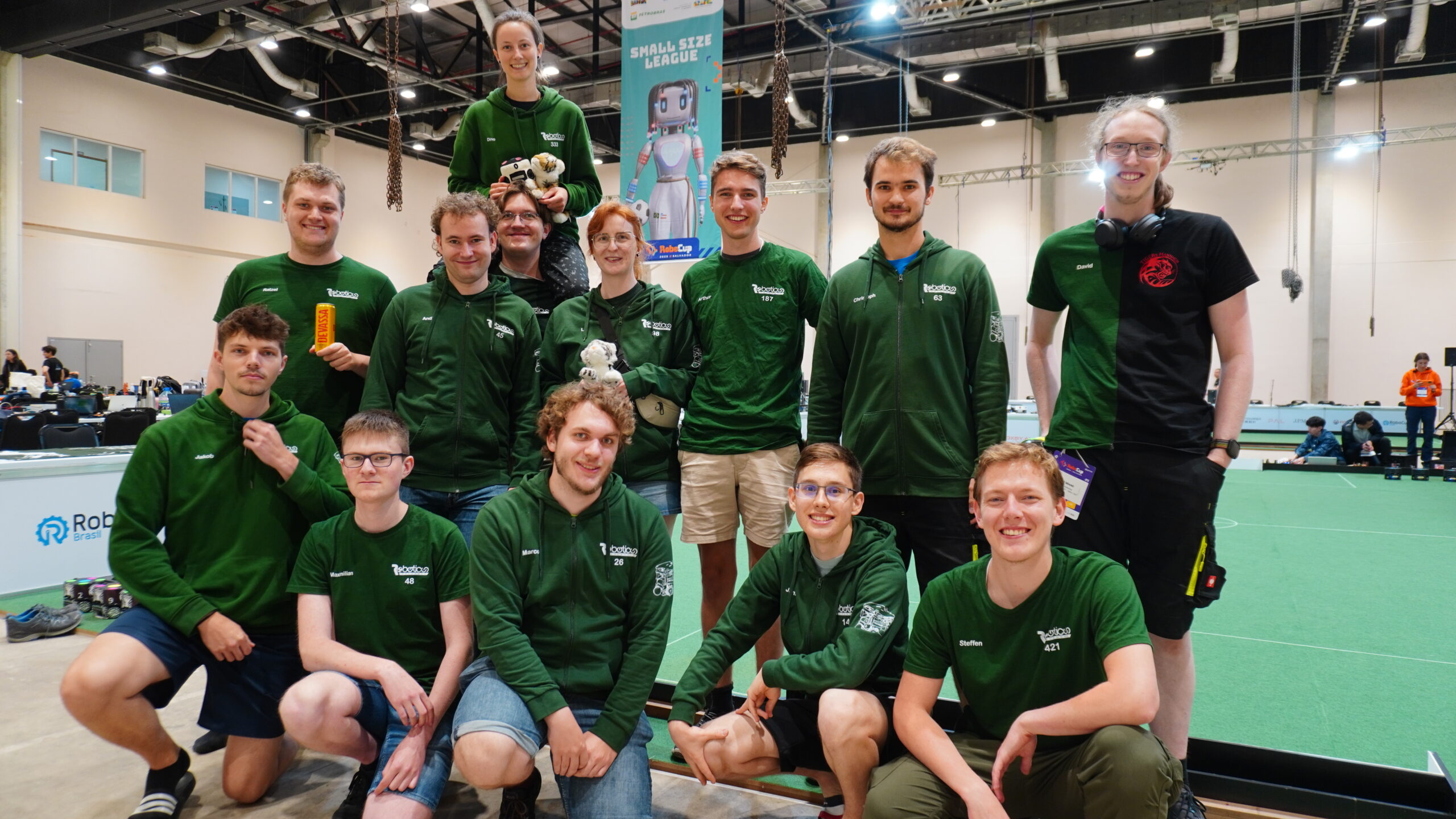
Team ER-Force!
Day 2 – All About the Tech

Today was all about the technical side. Each subteam was fully focused and working across all fronts.

The mechanics team had their hands full: to avoid any conflicts with the new batteries, the shot covers were quickly reshaped – creative, functional, and efficient.

The electronics team was also deep in hands-on work. A major redesign was tackled: the modular setup was reworked so that connectors can now only be plugged in correctly – unless someone really tries to force it wrong. In addition, broken light barriers were repaired, bringing back some much-needed reliability.

Firmware made the most of the day by focusing on two big topics: work on the FPGA (a chip in our new Funkmaster module that needs to be programmed on the hardware level) and intense tinkering with Active Disturbance Rejection Control (ADRC) – a system that actively counters disturbances or prevents them from happening in the first place. The central question of the day: how can we identify potential sources of error early and eliminate them reliably? Not flashy – but exactly the kind of detail that makes a difference.

The strategy team worked on fixing bugs from past test games and continued refining

the tactical routines. At the same time, one topic kept coming back: wireless communication. Already a problem child during RoboCup in Bordeaux, the connection between robots and control remains a hot topic – and a critical one.


In the late morning, the whole team gathered at the hotel pool for a meeting. A relaxed setting for a focused debrief: reflecting on our recent workshop and what insights we

want to carry forward into the competition days ahead.

The day wrapped up with what should’ve been a simple dinner order – but turned into a bit of an adventure. CPF numbers (which are required for many things in Brazil), missing phone numbers, and the ever-present language barrier created quite a bit of chaos – but also plenty of laughs. After a long wait, the food finally arrived. Verdict: delicious, a bit chaotic, but definitely a moment we’ll all remember.


Day 1 – Hitting the Ground Running (and Swimming)

The first full day on site kicked off with a mix of sun, sea, and serious setup work. After breakfast, we headed straight to the beach – no hesitation, straight into the water. It was the perfect way to shake off the long journey and enjoy a moment of freedom before the intensity of RoboCup truly begins.

Back at the hotel, the whole team gathered in the lobby to plan the day, unpack equipment, and organize tasks. Everyone split into their respective areas – mechanics, electronics, software, firmware and publicity – ready to dive in.

Meanwhile, part of the team ventured out to a local supermarket to stock up on supplies. It turned out to be more of a mission than expected: the language barrier made even simple things challenging. But with creativity and teamwork, we pulled it off.

After a quick bite to eat, the real work began.
The software team got everything tournament-ready – testing, tweaking, and fixing the final bugs. On the firmware side, there were still some battles with the wireless communication.
Electronics involved some re-soldering on the robots, and mechanically we added damping to the battery holders to prevent damage during rapid acceleration or sudden stops.

We also took the time to go through the scientific papers of the other teams qualified for RoboCup – gaining insight, inspiration, and valuable context for the competition.

The work carried on late into the night. It wasn’t always smooth, but the team powered through with determination and focus. We’re now fully arrived – with robots, team spirit, and a good dose of ambition in our luggage. Let’s get this RoboCup started!

RoboCup 2024: Review

Tournament

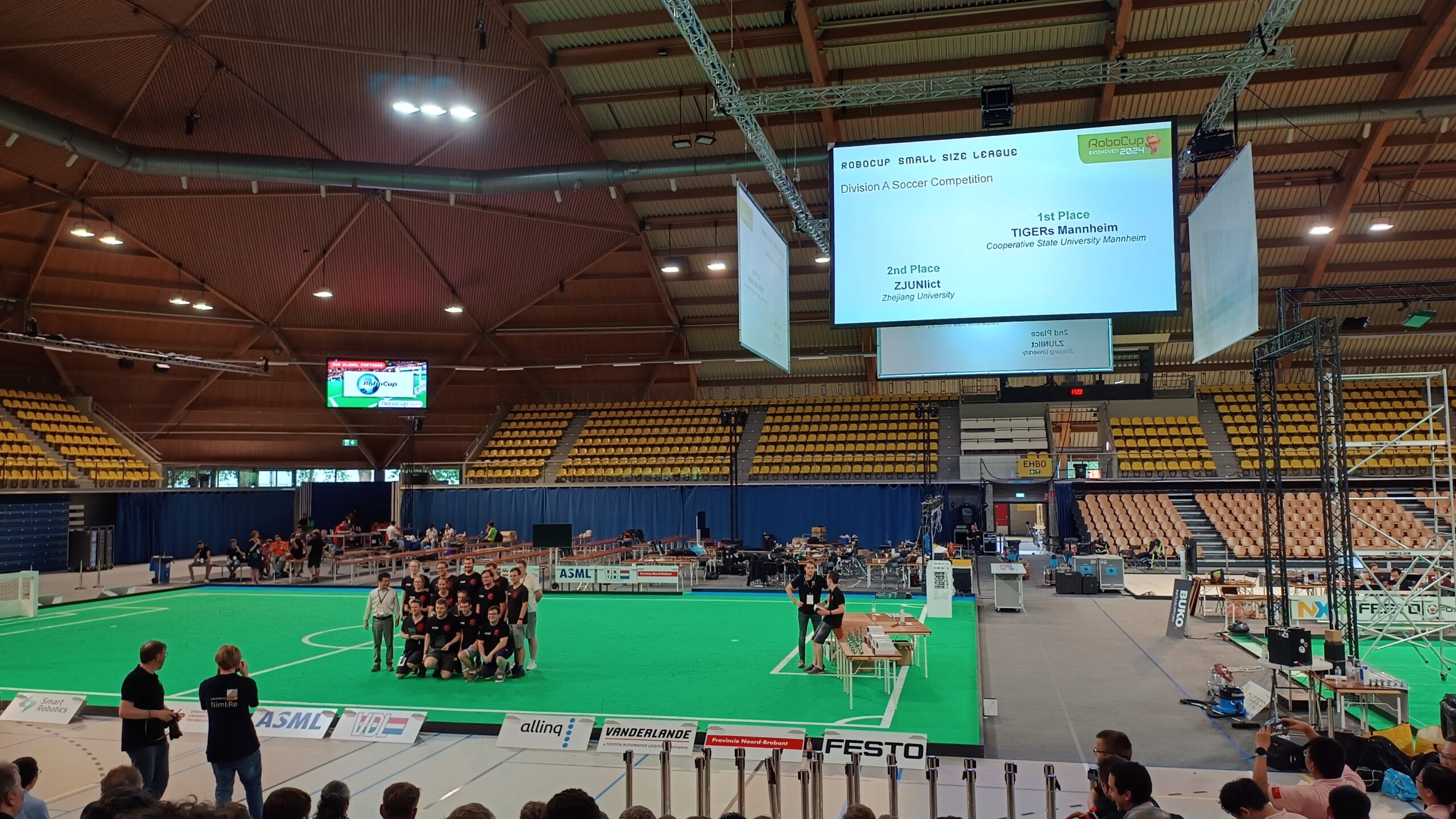
In our Division A of the Small Size League of RoboCup this year, nine teams from five countries competed against each other. A special feature was the two newcomers RobôCIn and luhbots, who this year made the step from Division B to a larger field and more robots in Division A. After three setup days, the teams first competed in a 4-team and 5-team group during the two group match days. The top three teams from each group then advanced to the knockout phase over the next two match days. By securing second place in our group, we were able to secure a good starting position here. In the double elimination mode, the respective group winners and runners-up could each lose once without being eliminated from the tournament. Thanks to our good performances on the field, we managed to secure a solid third place for our team despite many games in the lower bracket. Second place went to the Chinese team ZJUNlict and the current and past world champion is TIGERs Mannheim. A special mention should definitely go to the two new teams who managed to play exciting and balanced games against long-standing Division A teams almost right from the start. Particularly, the fourth place of RobôCIn is an extremely strong performance. At this point, we would also like to expressly thank luhbots, Immortals, RoboTeam Twente, RobôCIn, and TIGERs Mannheim for their help and extraordinary commitment to the league. This is by no means a matter of course.


Our Team in the Tournament

For us, the RoboCup started off quite bumpy again, and the first fears arose that we might experience a similar disaster to 2023 in Bordeaux. Fortunately, this was not the case. Instead, we managed to solve individual problems step by step. During the setup days and our first game, we still struggled considerably with our radio system and the control of the robots. But by the second game, we were already capable of fielding 11 robots. Nonetheless, we refrained from doing so in the group phase and fielded 8 robots each time. This was mainly because we were still plagued by overheating issues, and substitute robots were therefore extremely valuable.

For the knockout stage, we took a bold step and removed unnecessary parts from the module connector PCB and equipped our motor boards with heat sinks. Together with a relentless hunt for individual faulty robot components, we were able to increase the reliability of our fleet so that we could permanently field 11 robots in the knockout phase. This is a strong performance by the entire team, and we are excited about what the future holds with the now fully functional robots. Thus, we can conclude this RoboCup, tired from the strenuous days, but satisfied with our progress and success.


Betting Game

A novelty this year was the betting game we organized for RoboCup 2024. Just like in conventional football, bets could be placed on individual games, the outcome of the group phase, and the overall tournament. The most points were collected by our team members Michi and Mike, who stayed at home. Due to the great support from other teams, we plan to set up an official betting game for RoboCup next year.


Impressions


RoboCup 2025

Now that RoboCup 2024 in Eindhoven has ended and all teams have departed, we look to the future. We look forward to an interesting year with many improvements and innovations in our strategy and robots, as well as visits from other teams. But of course, our main focus is on the next RoboCup 2025. It will take place from July 15 to July 21, 2025, in the Brazilian coastal city of Salvador. The first images of the location already make us excited for sun, warmth, and of course a RoboCup hall right next to one of Brazil’s beautiful beaches.

See you in Salvador!


RoboCup 2024: Knock-Out Games

Robot Testing

The new radio system and our robots’ control have finally been running stably since the last games. This is now the ideal starting point to increase the availability of other subsystems of our robot fleet. Between games, we use the time intensively to fix individual robots and validate changes in our strategy. By solving our overheating issues, we are now able to reliably maintain a fleet of 12 to 13 robots throughout an entire game. This means there are always robots available to substitute.

Wired Testing


An important building block for our increased fleet availability in games is a new way to test robots without using the radio system. Our firmware programmer Maxi has implemented a serial protocol to enable wired control of the robots. This allows us to test robots after repairs during games, reducing the risk of deploying defective robots.

Games

Right on time for the Knockout Stage, we had enough robots and a stable control setup to participate in games with 11 robots. Often, all 13 robots we brought along were ready for action, with enough substitute bots available for minor defects. Nevertheless, we could not overcome the superiority of TIGERs Mannheim and lost the first game in the Knockout Stage. A unique aspect of our tournament format is that the first loss does not mean immediate elimination; instead, we continue in the Lower Bracket until another loss there. We won our next game against RoboDragons, allowing us to proceed in the Lower Bracket. We also managed to defeat RobôCIn. With this victory, we secured our place in the Lower Final on Sunday. In this game against ZJUNlict, we unfortunately lost 0-1 after a strong performance. With this, we conclude RoboCup 2024 in 3rd place in Division A of the Small Size League.